07908 489 456
This practical, CPD-accredited four-module training explores the powerful impact of trauma-informed communication on behaviour, relationships and emotional regulation. Drawing on my lived experience of trauma, extensive therapeutic training and work across several alternative provisions, I have witnessed first-hand the impact of staff overwhelm, high staff turnover and the disruption this causes for young people.
Delegates explore trauma and attachment, the stress response cycle, communication that unintentionally undermines connection, and practical language that builds safety, trust and cooperation. Staff leave with effective tools they can implement immediately to create calmer environments, reduce escalation, strengthen relationships and encourage staff retention.
With flexible delivery options, available online or in person, the training can be delivered in a format that suits the needs, schedules and demands of your setting.
Exploring what trauma is, how it can impact behaviour and relationships, and how its effects can pass through generations. Delegates are introduced to the four attachment styles and their influence on trust, connection and emotional safety.
Exploring triggers and the five stress responses – fight, flight, freeze, fawn and flop. Delegates learn to recognise both the obvious and less obvious symptoms of trauma and how these can manifest through everyday behaviour.
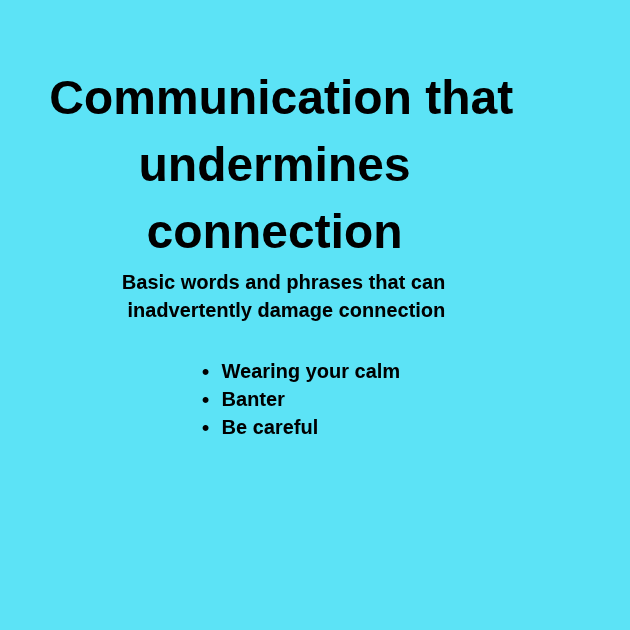
Exploring how everyday language and well-intentioned communication can unintentionally undermine connection, trigger defensiveness and contribute to escalation.
Exploring practical communication techniques, including indirect language, matching and mirroring, and sensory acuity, to build trust, create emotional safety and encourage collaboration.
We need your consent to load the translations
We use a third-party service to translate the website content that may collect data about your activity. Please review the details in the privacy policy and accept the service to view the translations.